
2021
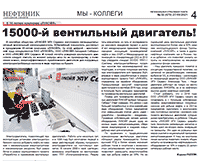
The 15,000th Permanent Magnet Motor!
 |
Author:
Publication: Regional industry newspaper “Oilman of Western Siberia” — 2021 — No. 38 In September, “LUKOIL ESP Service” manufactured its fifteen-thousandth permanent magnet motor. The milestone was reached on the eve of the 30th anniversary of “LUKOIL”. Behind this figure stands many years of work by specialists of PJSC “LUKOIL”, LLC “LUKOIL-Western Siberia”, and LLC “LUKOIL ESP Service”. The starting point in the history of the permanent magnet motor should be considered not the launch of the production workshop, but the appearance of a new, energy-efficient LUKOIL motor for electric submersible pumps as a drawing on paper. |
Priority Projects and Innovative Developments of LUKOIL ESP Service
 |
Author:
Publication: “Engineering Practice” — 2021 — No. 04 One of the largest oilfield service companies in Russia and a major manufacturer of submersible oilfield equipment, LUKOIL ESP Service is implementing a number of projects and innovative developments aimed at expanding its product range and fulfilling the strategic objectives of PJSC “LUKOIL”. The company is developing a high-performance downhole equipment system, has initiated modernization of the certified SIEPPA electric submersible unit testing facility, and is conducting pilot field tests of a remote monitoring and control system. As part of optimizing permanent magnet motor production, a technology for restoring the properties of used permanent magnets is being introduced, while in-house production of stator and rotor laminations is being established. |
On the Revision of Equipment Names and Abbreviations Used in Artificial Oil Production Technologies (Implementation of GOST R 56830-2015 Requirements in Technical Documentation for Electrically Driven Downhole Vane Pump Systems)
 |
Authors:
Publication: “Equipment and Technologies for Oil and Gas Industry” — 2021 — No. 3 The expansion of the range, design features, and operating principles of downhole pumping systems required the development and implementation of the Russian national standard GOST R 56830-2015 “Oil and Gas Industry. Electrically Driven Downhole Vane Pump Systems. General Technical Requirements.” However, many technical documents, specifications, and educational materials still use outdated terms and abbreviations that no longer reflect the current level of oil production technology development. This creates confusion in student education, equipment procurement, and oil production performance analysis. Compliance with national and interstate standards in technical documentation for oil production equipment should improve product quality and competitiveness in both Russian and international markets. |
2018
On the Influence of Operating Conditions on the Actual Service Life of Electrically Driven Downhole Vane Pump Equipment
 |
Authors:
Publication: “Territory Neftegaz” — 2018 — No. 12 One of the pressing issues faced by oil and gas production companies is determining the service life of equipment depending on operating conditions. This is related to the fact that financial resources for replacing worn-out equipment are accumulated over its service life through gradual transfer of equipment cost into the production or service cost structure. |
Improving Oil Production Efficiency of Electrically Driven Pump Systems Through Optimization of Equipment Classification in Russian Fixed Asset Classifiers
 |
Author:
Publication: “Territory Neftegaz” — 2018 — No. 7-8 The efficiency of developing and using industrial equipment largely depends on taxation levels, which are determined by the classification systems applied to manufactured and operated products. These systems assign classification codes to engineering products within Russian fixed asset and product classifiers. Such codes create the foundation for a unified information environment in the Russian Federation, support regulation of the market economy including taxation, facilitate industrial specialization and cooperation, and provide statistical and forecasting tools for socio-economic development. |
Implementation of a Unified Telemetry Protocol and Unified Technical Requirements for Downhole Telemetry Systems
 |
Publication: “Engineering Practice”
Issue: “Engineering Practice” — 2018 — No. 10 In 2016, PJSC “LUKOIL” made the decision to develop and implement a Unified Protocol for telemetry systems. Based on the results of laboratory and field tests of telemetry systems from different manufacturers, the validity of the solutions incorporated into the Unified Protocol was confirmed. The protocol was included in the Unified Technical Requirements for the supply of downhole telemetry systems introduced on July 1, 2018. |
On Incentives for the Development and Use of Energy-Efficient ESP Equipment
 |
Author:
Matvey Yakovlevich Ginzburg — Advisor to the Director of the Permanent Magnet Motor Plant, LUKOIL ESP Service, Moscow, Russia
Publication: “Quality Management in the Oil and Gas Industry (UKANG)” Issue: “UKANG” — 2018 — No. 1 Electric submersible pump systems are the primary oil production technology used in Russia. In 2017, wells operated with ESP systems accounted for 66% of the total oil well stock, while these systems produced 81.2% of all oil extracted in the country. Electricity costs associated with ESP operation represent a significant portion of oil production operating expenses. Therefore, improving the energy efficiency of this production technology is a priority task in reducing oil production costs. |
Standardization of Installation Dimensions for Downhole Telemetry Systems
 |
Author:
Issue: “Engineering Practice” — 2018 — No. 2 The use of different connection unit designs and dimensions for integrating downhole telemetry systems into ESP and PCP systems increases equipment cost, expands spare parts inventories in service centers, and complicates installation and repair operations. In addition, comparative testing of telemetry system modules from different manufacturers demonstrated that differences in temperature sensor locations lead to inconsistent interpretation of temperature measurements and temperature dynamics. A similar issue also exists with different dimensions and connection interfaces of surface telemetry units. The variety of form factors increases equipment costs during control station cabinet manufacturing, complicates installation, and requires additional modifications to cabinet designs during installation of surface telemetry units. Based on the conducted studies, specialists of LUKOIL ESP Service developed proposals for standardizing installation dimensions of downhole telemetry systems and revising requirements for the installation location of downhole temperature sensors. Beginning in 2018, unified installation dimensions were introduced into procurement requirements for telemetry systems used by production subsidiaries of PJSC “LUKOIL”. |
2017
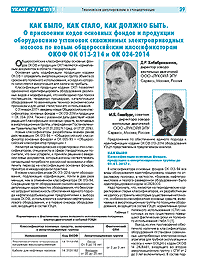
HOW IT WAS, HOW IT BECAME, HOW IT SHOULD BE.
On the Assignment of Fixed Asset and Product Classification Codes to Electrically Driven Downhole Pump Equipment According to the New Russian Classifiers OKOF OK 013-2014 and OK 034-2014
 |
Authors:
In the new OK 013-2014 classifier, the number of equipment groups subject to classification is nearly half that of the cancelled OK 013-94 classifier. The reduction in equipment groups decreased the level of detail available for equipment classification, which significantly complicates the establishment of a unified approach by oil and gas production companies when assigning OKOF codes to oilfield equipment, especially equipment included in ESP systems. Proposals for ensuring a unified approach to identifying ESP equipment using OKOF 013-2014 codes are presented in the analysis provided in this article. |
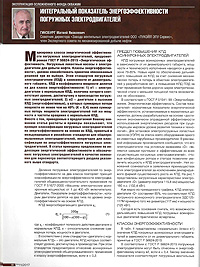
Integral Energy Efficiency Indicator for Submersible Motors
 |
Author:
Issue: “Engineering Practice” — 2017 — No. 11-12 The energy efficiency class labeling of submersible motors предусмотренная by GOST R 56624-2015 “Energy Efficiency. Submersible Vane Pumps and Motors for Oil Production. Energy Efficiency Classes” is intended to support informed equipment selection decisions. The calculations and examples presented in this article demonstrate that the principle of classifying submersible motors by efficiency based solely on motor efficiency (η), adopted in international and Russian standards for general-purpose electric motors, is unsuitable for evaluating the energy efficiency of submersible motors. The article proposes the introduction of energy efficiency indexing in motor designations as a basis for revising the corresponding section of the above-mentioned standard. |
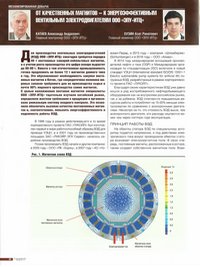
From High-Quality Magnets to Energy-Efficient Permanent Magnet Motors of EPU-ITC
 |
Authors:
Issue: “Engineering Practice” — 2017 — No. 9 The production of permanent magnet motors (PMMs) at EPU-ITC requires approximately 40 tons of samarium-cobalt permanent magnets annually, and this figure is expected to increase to 80–90 tons as production expands. At the same time, domestic industry is capable of supplying no more than 12 tons of such magnets per year. This necessitates purchasing permanent magnets from China, where half of the world’s reserves of the required raw materials and nearly 90% of global magnet production are concentrated. To establish reliable magnet supplies, EPU-ITC specialists thoroughly studied the Chinese market, developed strict product requirements, and implemented a unique incoming quality control system. This made it possible to ensure high magnet quality and consequently improve the energy efficiency and reliability of PMMs. |
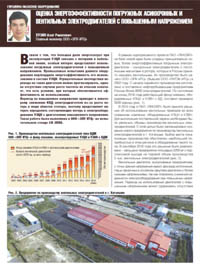
Evaluation of Energy Efficiency of High-Voltage Submersible Induction and Permanent Magnet Motors
 |
Author:
Since a significant portion of energy losses during ESP operation is associated with the cable line, the use of high-voltage submersible motors is of particular interest. Field trials confirmed the energy efficiency of such equipment when used in ESP systems. Potential negative consequences of switching to high-voltage motors can be predicted; however, the absence of increased failure rates indicates that conditions exist under which their use remains effective. Transitioning to higher voltage results in a slight decrease in motor efficiency due to increased copper losses in stator windings. Therefore, it is important to determine the distribution of energy losses in ESP electrical equipment using high-voltage motors. Such work was carried out at EPU-ITC using the SI EPPA testing facility. |
2016
Improving Smart Field Project Efficiency Through the Use of KP VD 32 5 14
 |
Author:
Intelligent oil production using ESP systems is achieved through the use of control stations equipped with variable frequency drives, allowing optimization of well production rates. Today, the market offers a wide range of control stations differing in data processing methods, pumping algorithms, parameter visualization, and other characteristics. However, intelligent control algorithms cannot be fully implemented with maximum efficiency when using induction drives, since induction motors do not possess wide speed regulation capabilities. In addition, the efficiency of standard induction motors is relatively low and decreases significantly under partial load conditions typical of ESP production optimization. |
Launch of a New Enterprise. Industrial Production of Permanent Magnet Motors Started in Kogalym
 |
Author:
Publication: “Engineering Practice” Magazine — 2016 — No. 8 Electric submersible systems play a crucial role in oil production, as the majority of oil is currently lifted to the surface using this technology. Responsibility for repair and maintenance of this equipment in Western Siberia and other regions has been entrusted to LUKOIL ESP Service, headquartered in Kogalym, with divisions operating across Yugra, Yamal, and beyond Western Siberia. In accordance with the development strategy of PJSC “LUKOIL” and LUKOIL ESP Service, serial production of permanent magnet motors for electric submersible systems was launched in Kogalym in September 2016. An extended scientific and technical council meeting was held at the enterprise only one month after production startup. Pilot field tests of the new motors are being carried out at Pokachevneftegaz.
Download article in PDF format (820 KB)
|
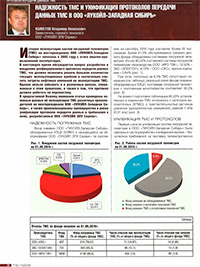
Reliability of Downhole Telemetry Systems and Standardization of Telemetry Data Transmission Protocols in LUKOIL-Western Siberia
 |
Author:
The history of operating downhole telemetry systems at the oilfields of LUKOIL-Western Siberia began in 2002 during the pilot industrial operation phase. At present, the development and implementation of a unified telemetry data transmission protocol is being discussed. Such a protocol would help solve many current operational problems and significantly reduce operating costs for oil companies using telemetry systems. However, it is also important to consider the risks associated with this process and ensure that the protocol remains scalable and future-oriented. |
THE FULL CYCLE IS COMPLETE!
PJSC “LUKOIL” Launches Large-Scale Production of Permanent Magnet Motors for ESP and PCP Systems |
Authors:
At the beginning of September, a new enterprise for the production of permanent magnet motors for electric submersible pumps was launched in Kogalym (Khanty-Mansi Autonomous Okrug — Yugra). The launch of the enterprise during the celebration of the 25th anniversary of PJSC “LUKOIL” marked the final stage of the “idea–development–production–implementation” cycle. By investing significant resources in the project at the end of the last century, when its prospects were still uncertain, LUKOIL made the right decision. Permanent magnet submersible motors developed within the corporate project proved their efficiency and have now become highly востребованное equipment in the industry, providing substantial cost savings in oil production. |
Verification of Energy Performance Characteristics of Submersible Motors in the New Standard for Electrically Driven Downhole Vane Pump Systems
 |
Author:
One of the principles of national standardization is the maximum possible harmonization of developed standards with corresponding international standards. However, it is not always possible to fully implement this principle when developing Russian standards. GOST R 1.0-2012 “Standardization in the Russian Federation. Basic Provisions” contains a list of circumstances permitting deviations from this principle during standard development. These provisions were taken into account in the development of GOST 56830-2015 “Electrically Driven Downhole Vane Pump Systems. General Specifications”, which corresponds to ISO/DIS 15551-1 Electric submersible pump system for artificial lift. |
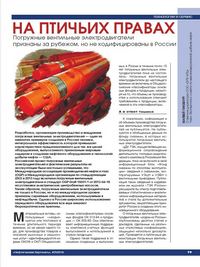
Limited Recognition
 |
Author:
The development, industrial production, and implementation of submersible permanent magnet motors represent one of the few examples in Russia where equipment has been created whose integrated efficiency exceeds that of comparable equipment manufactured by the recognized global leader in oilfield equipment and oil production technologies — the United States. The Russian project for submersible permanent magnet motors and the actual operating results proved so successful that in 2013 the International Association of Oil & Gas Producers (OGP) and the International Organization for Standardization (ISO) included submersible permanent magnet motors in the OGP Draft 15551-1 standard dated 2013-04-18 for electric submersible pump systems. Thus, submersible permanent magnet motors have been recognized not only in Russia but also internationally as serially manufactured equipment used in oil production. However, bureaucratic barriers still hinder the widespread adoption of advanced equipment in Russia. |
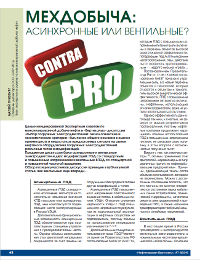
Artificial Lift: Induction or Permanent Magnet?
 |
Author:
The discussion “Selection of Submersible Motors: Technological and Economic Criteria,” initiated by the Expert Council on Artificial Lift Oil Production and “Vertical,” aimed to establish a common understanding of the advantages and disadvantages of various types and modifications of submersible motors currently available on the oilfield equipment market. The discussion focused on induction and permanent magnet motors in two configurations: standard- and high-voltage induction motors, as well as permanent magnet motors with standard and increased rotational speed. An overview of the participants’ positions is presented in the published article: the era of permanent magnet motors is still ahead… |
2015
Not Only Import Substitution. Russia Is Capable of Creating Innovative Oilfield Equipment with No Global Analogues
 |
Author:
Reducing dependence on imported equipment and materials has long been discussed within the Russian oil and gas industry. An active initiator of discussions related to import substitution and implementation strategies has been the Gubkin Russian State University of Oil and Gas. Back in 2004, the National Oil and Gas Institute Round Table held there discussed the challenges of providing Russian oil producers with domestically manufactured artificial lift equipment, particularly ESP systems. |
Energy-Efficient ESP Systems: Reasons for a Cool Reception
 |
Author:
If it is appropriate to compare the stages of recognition of innovative developments, then informed decisions regarding the acquisition and use of energy-efficient ESP systems manufactured by Novomet-Perm, in particular, require time for objective analysis of controlled field operation results. The primary factor limiting broader implementation of energy-efficient ESP systems is uncertainty regarding operational costs. Information is needed regarding the repair, restoration, and reuse of energy-efficient ESP systems after retrieval from wells, including repair costs and other operational expenses. Such information should be consolidated and communicated to potential customers. It is possible that the developers and manufacturers of energy-efficient ESP systems will identify additional technical solutions that improve industry acceptance of this equipment. As oil companies accumulate sufficiently accurate statistical data from controlled field operation, a clearer customer response can be expected. |
How Wealthy Must You Be to Buy Cheap Things? Selection of Submersible Motors: Technological and Economic Criteria
 |
Author:
The largest share of submersible equipment purchased by oil companies consists of traditional electric submersible centrifugal and progressive cavity pump systems and their corresponding motors. Other equipment types — including energy-efficient ESP systems, AKM ESP systems (automatic compact low-profile systems), motors with rated rotational speed of 6000 rpm, high-voltage and parametric motors — are purchased in much smaller volumes, although according to their developers they significantly outperform traditional equipment. These non-traditional equipment types do indeed possess certain advantages over conventional equipment, but they also have disadvantages that manufacturers typically do not emphasize to potential customers. Today, the use of such non-traditional equipment is based on the customer’s individual assessment of operational efficiency, which often differs from evaluations made by other operators. It may be worthwhile to organize a comprehensive discussion on the pages of “Vertical” — such experience already exists — regarding the efficiency and prospects of various artificial lift equipment types discussed in this review, under the heading “Pros and Cons”… |
2014
And Another Missed Opportunity?
 |
Author:
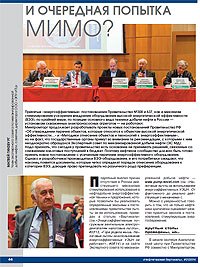
The “energy efficiency” Government Resolutions No. 308 and No. 637, as well as the mechanism intended to accelerate the implementation of high energy-efficiency equipment, do not work — at least with regard to one of the main oil production technologies in Russia: electrically driven downhole pumping systems. The Ministry of Industry and Trade continues developing draft Government resolutions “On Approval of the List of Objects Classified as High Energy-Efficiency Facilities…” and “Methodology for Classification of Facilities and Technologies as Energy Efficient,” but there is no guarantee that government authorities will take into account the recommendations repeatedly submitted by the Expert Council on Artificial Lift Oil Production. |
Gearless Energy-Efficient Drive for Pumpjack Gearboxes
 |
Authors:
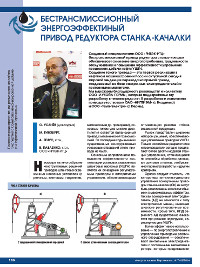
The gearless pumpjack gearbox drive developed by specialists of RITEK-ITC provides reduced power consumption, lower maintenance costs, and improved efficiency of sucker-rod oil production control. The creation of this drive represents the first implementation in Russian petroleum engineering of the global trend toward direct-drive systems based on permanent magnet synchronous motors. We express our gratitude to the management and staff of LUKOIL-PERM, who supported this development over many years. OJSC “NIPTIEM” (Vladimir) and Temp-Elektro LLC (Perm) also participated in the development and testing of the drive system. |
Gearless Energy-Efficient Pumpjack Gearbox Drive
 |
Authors:
Issue: “Engineering Practice” — 2014 — No. 7-8 Despite the wide variety of sucker-rod pumping unit drive designs (rack drives, screw drives, hydropneumatic drives, etc.), the conventional beam pumping unit with mechanical transmission has remained the primary drive type for many decades. In recent years, no significant design improvements have been introduced for this drive type. The main direction for improving the efficiency of sucker-rod pumping unit operation is the implementation of variable-speed drives equipped with control algorithms that optimize well production performance. |
Gearless Energy-Efficient Pumpjack Gearbox Drive
 |
Authors:
Publication: Article prepared for “Oil & Gas Vertical” magazine |
Permanent Magnet Drives for ESP and PCP Systems — An Example of Successful Synergistic Effect in Engineering
 |
Author:
Source: Electronic version published on the publisher’s website Permanent magnet drives were originally developed to improve the energy performance of submersible motors. However, the final operational result significantly exceeded the original objective. Therefore, the development of permanent magnet drives for ESP and PCP systems can serve as an example of a successful synergistic effect in engineering, where the combined interaction of two or more factors substantially exceeds the simple sum of the individual components. |
The Mountain Gave Birth to a Mouse. Tax Incentives for Energy-Efficient ESP Systems Do Not Work
 |
Author:
Source: Publication on the publisher’s website More than a year has passed since the publication of the article “Tax Incentives for Energy-Efficient Submersible Permanent Magnet Motors” (see NGV #03’13), which provided both a detailed analysis of the reasons for the absence of an effective mechanism in Russia to stimulate the use of energy-efficient oilfield equipment and proposals for implementing the incentives established by Russian federal laws and government resolutions. Over the past year, the situation regarding incentives for the use of energy-efficient oilfield equipment has not improved. Moreover, of the two incentives provided by Federal Laws No. 261-FZ dated November 23, 2009, and No. 132-FZ dated June 7, 2011 — accelerated depreciation and exemption from property tax — only accelerated depreciation remains applicable. The stimulating effect of property tax exemption was eliminated following the adoption of Federal Law No. 202-FZ dated November 29, 2012, under which movable property registered as fixed assets after January 1, 2013, is no longer recognized as taxable property. |
Tax Incentives for the Use of Energy-Efficient ESP Systems. From a Phantom Mechanism to an Effective Incentive Tool

|
Author:
Publication 1: Website of the Expert Council on Artificial Lift Oil Production Publication 2: Expert Community, website of “Oil & Gas Vertical” magazine One of the factors restraining large-scale energy modernization across Russian industry is the higher cost of energy-efficient equipment compared to standard equipment. In this regard, compensation to consumers and developers for part of the expenses associated with the development and purchase of energy-efficient equipment could become one of the key mechanisms стимулирования its broader industrial implementation. The transition to new technical solutions and technological processes that reduce the energy intensity of manufactured products should be encouraged by Russian laws and Government resolutions establishing tax preferences for enterprises developing and using energy-efficient equipment. |
2013
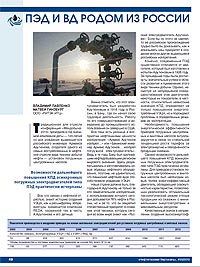
Submersible Motors and Permanent Magnet Motors Originated in Russia
|
Authors:
Source: Publication on the publisher’s website The traditional industry conference “Artificial Lift 2013” was held during the year marking the 120th anniversary of the birth of the outstanding Russian engineer Armais Arutunoff, creator of one of the most important oil production technologies — electric submersible pumping systems. Everyone connected with the oil industry knows the history of ESP development, as well as the meaning of the famous REDA company abbreviation, named after A. Arutunoff and his invention. It is important to note that this electric motor was originally developed by Arutunoff in 1916 in Russia, in Baku, where he began his professional career. The work on improving and bringing the motor to industrial application was completed later in the United States. There is still a difference in how the value of the invention is perceived: “Armais Arutunoff invented…” versus “Baku engineer Armais Arutunoff invented the submersible electric motor.” At that time, Baku was one of the world’s largest oil-producing regions. New oilfield equipment was designed and manufactured there, so it is not surprising that the unique oilfield engineering atmosphere of Baku contributed to the creation of the ESP system. |
Tax Incentives for Energy-Efficient Submersible Permanent Magnet Motors
|
Authors:
Source: Publication on the publisher’s website Following RITEK-ITC, which is part of the LUKOIL Group, other companies in Russia also began manufacturing permanent magnet motors. Although submersible permanent magnet motors are energy-efficient oil production equipment, they were not included in the official list of high energy-efficiency equipment approved by Government Resolution No. 308 dated April 16, 2012, the use of which provides enterprises with tax incentives. In other words, tax incentives for energy-saving equipment have been formally approved, but the adopted regulatory acts do not allow oil companies to fully benefit from them because the practical mechanism for applying incentives to enterprises manufacturing and using energy-efficient equipment has not yet been properly implemented. |
2012
Selection of ESP Cable Cross-Sections Considering Market Conditions
|
Author:
Source: Electronic version published on the publisher’s website (Full access available only to subscribers) Today, Russian oil companies generally equip ESP systems with cable lines whose technical characteristics correspond to well fluid parameters and long-term permissible load current values. If the calculated operating current corresponds to the permissible current ratings of cables with different conductor cross-sections, the least expensive cable option is usually selected. Until recently, power losses in cable lines were not considered a factor when selecting conductor cross-sections. This purely technical approach was formed during the Soviet period, when electricity tariffs and cable product prices remained extremely low and stable. Today, however, when electricity tariffs and cable prices are determined by market conditions, the need has emerged to revise the existing approach to selecting cable cross-sections. |
2011
Submersible Motors for ESP and PCP Systems:
Only the Facts
WHO, WHERE, WHEN, AND HOW MANY?
|
Authors:
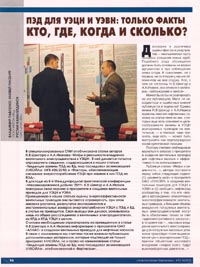
Source: Publication on the publisher’s website (Access available only to magazine subscribers) A paper by N.V. Shengur and A.A. Ivanov entitled “Myths and Realities of Permanent Magnet Motor Implementation in ESP Systems” was published in specialized media. The authors attempted to refute the information presented in our articles “The Trend of Replacing Induction Motors with Permanent Magnet Motors: The World Followed the LUKOIL Innovation” (NGV #20/2010) and “Factors Ensuring Reduced Power Consumption of ESP Systems When Replacing Induction Motors with Permanent Magnet Motors.” At the 8th International Practical Conference “Artificial Lift 2011,” N.V. Shengur and A.A. Ivanov repeated their claims regarding priority in the development of permanent magnet drives for ESP and PCP systems. They attempted to challenge our assessment of permanent magnet drive energy efficiency without presenting calculations, experimental data, or instrument-based measurements comparing ESP power consumption with induction and permanent magnet motors. We consider it necessary to respond to the information published regarding the alleged priority of ALNAS in the development of permanent magnet drives for oil pumps. For this reason, we also consider it important to publish additional materials confirming not only the priority of LUKOIL, but also the validity of the title of our article “The Trend of Replacing Induction Motors with Permanent Magnet Motors: The World Followed the LUKOIL Innovation.” |
Once Again on the Energy Efficiency of Permanent Magnet Drives for ESP Systems
|
Authors:
Source: Electronic version published on the publisher’s website The question of how energy-efficient permanent magnet drives actually are under different implementation approaches and operating conditions has undoubtedly become one of the most relevant and controversial topics today. Since the technology is only beginning to gain real momentum, heated discussions are inevitable. In response to the article “Myths and Realities of Permanent Magnet Motor Implementation in ESP Systems” published in Issue No. 3 of “Engineering Practice” in 2011, the editorial board received a detailed commentary from Matvey Yakovlevich Ginzburg, Deputy General Director of RITEK-ITC. |
Monitoring Systems for Drives Based on Permanent Magnet Motors for ESP and PCP Systems
|
Author:
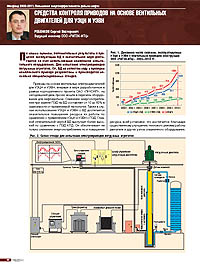
Source: Electronic version published on the publisher’s website According to our estimates, the positive operational results achieved with permanent magnet motors are largely due to the use of specialized testing equipment systems. Several specialized test benches have been developed and manufactured for testing submersible drive systems, control stations, permanent magnet motors under no-load conditions, and integrated drive systems. |
Classification of Submersible Motors by Energy Efficiency
|
Author:
Source: Publication on the publisher’s website (Access available only to magazine subscribers) Providing consumers with information about the energy efficiency of equipment is an important instrument of energy-saving policy. This information enables buyers and users to objectively evaluate purchased equipment and encourages the use of energy-efficient technologies, which in turn stimulates the development of machines with improved energy performance. For proper classification of submersible motors by energy efficiency and accurate comparison of their energy performance characteristics, testing of submersible motors should be carried out according to a unified methodology by organizations independent from both manufacturers and consumers. The obtained energy-efficiency indicators should reasonably be included in the designation of submersible motors. |
2010
The Trend of Replacing Induction Motors with Permanent Magnet Motors: The World Followed the LUKOIL Innovation
|
Authors:
Source: Publication on the publisher’s website (Access available only to magazine subscribers) On June 25, 2010, the ninth meeting of the Expert Council on Artificial Lift Oil Production was held, and one of its main topics was the discussion of trends in the development and implementation of permanent magnet motors. The replacement of induction motors with permanent magnet motors is a global trend in the development of variable-speed drives for various machines and equipment. However, permanent magnet motors for submersible oil pumps were first developed and implemented in Russia within the framework of the corporate project of LUKOIL. |
Comparative Analysis of Electromagnetic Processes in Electric Drive Systems for the Oil Production Industry
|
Authors:
Source: Publication on the publisher’s website The article discusses issues of electromagnetic compatibility of control stations used in electric drive systems for the oil production industry with different types of drive motors (induction and permanent magnet) in the presence of a long power cable supplying a submersible motor. |
Factors Ensuring Reduced Power Consumption of ESP Systems When Replacing Induction Motors with Permanent Magnet Motors
|
Authors:
Source: Electronic version published on the publisher’s website Drive systems based on permanent magnet motors developed by RITEK-ITC specialists have firmly established themselves among the equipment used by oil producers to improve oil production efficiency. As of early June 2010, pumping systems equipped with motors designed and manufactured by RITEK-ITC were operating in more than 1,100 wells. The high energy efficiency of permanent magnet drives is determined not only by their electrical characteristics, but also by the possibility of effectively applying various well production operating modes. |
Permanent Magnet Drive Systems for ESP Applications in Low-Production Wells
|
Author:
Source: Electronic version published on the publisher’s website Development work on permanent magnet drive systems for submersible pumping equipment used in oil production began in 1995, and today these systems occupy a strong position among technologies aimed at improving oil production efficiency in low-production wells. Implementation of permanent magnet motors allows wells to be transferred from intermittent operation to continuous operation, increases production rates, and improves the energy efficiency of oil production from low-rate wells. |
Energy Efficiency of Permanent Magnet Drives for ESP and PCP Systems
|
Author:
Sergey Viktorovich Rebenkov — Lead Engineer at RITEK-ITC
Publication: “Engineering Practice” magazine, No. 03, 2010 Source: Electronic version published on the publisher’s website In 2010, the project for developing permanent magnet motors for ESP systems celebrated its 15th anniversary. Fifteen years earlier, the prospects of this type of drive were still unclear, but the project team clearly understood both the disadvantages of submersible induction motors and the advantages of permanent magnet motors, which by that time had already been successfully applied in various types of machinery. This understanding made it possible to believe in the success of the project. Today, the growing importance of energy conservation — driven both by rising electricity tariffs and increasing water cut in existing well stock — has secured permanent magnet motor systems a worthy place among the most effective modern technologies for artificial lift oil production. Operational results confirm the validity of this conclusion. |
On the Energy Performance of ESP Systems
|
Authors:
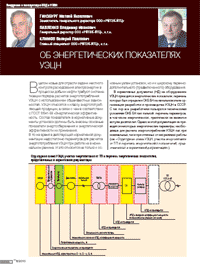
Source: Electronic version published on the publisher’s website The new industry-wide requirements for strict monitoring of electricity consumption in oil production processes require a systematic approach to calculating ESP system power consumption using generally accepted engineering methods. ESP systems belong to the category of energy-consuming products; therefore, in accordance with GOST 51541-99 “Energy Efficiency. Composition of Indicators,” the main energy-saving and energy-efficiency indicators must be included in the technical documentation of such systems. At the same time, the current regulatory documentation does not contain sufficient parameters for calculating ESP power consumption under non-rated operating conditions. This applies not only to the main system components, but also to a wide range of additional pre-connected equipment. |
Innovations of the 1970s: It Is a Pity When Valuable Experience Is Forgotten
|
Author:
Matvey Yakovlevich Ginzburg — Honored Engineer of the Azerbaijan SSR, First Deputy General Director of RITEK-ITC
Publication: “Oil & Gas Vertical” — 2010 — No. 13-14 — pp. 94-97 Source: Publication on the publisher’s website Service companies should receive mandatory performance bonuses through corresponding provisions included in service contracts whenever operational indicators exceed baseline targets. This conclusion is supported both by the current state of the artificial lift market and by industry experience accumulated over previous decades. In the 1970s, the author participated in the development of the rental-based ESP operation system implemented throughout the USSR — an economic innovation that encouraged the work of what are now called service companies through a “service-day” pricing model. If one continuously demands reduction of service costs without objective justification, the result may resemble the old saying: “We taught the horse not to eat — and just when it learned, it died.” |
2008
RITEK — Innovation and Technology Center LLC
|
Authors:
Source: Publication on the publisher’s website RITEK — Innovation and Technology Center LLC is a subsidiary of RITEK JSC — the Russian Innovative Fuel and Energy Company, part of the LUKOIL Group. The company is located in Moscow. Its main activities include:
The company employs 150 people, including 72% specialists with higher education and 28% workers and administrative staff. The overwhelming majority of specialists have extensive experience working in the defense industry and the oil sector. Several employees hold scientific degrees. |
2007
Innovative Technologies of RITEK JSC in the Development of Oilfield Equipment Drives
|
Authors:
Source: Publication on the publisher’s website In the country’s fuel and energy sector, solving the problem of energy conservation primarily requires improvement of highly energy-intensive technological processes, such as oil production using electric submersible pump systems (ESPs), which account for approximately 80% of oil production. In 2005, production of 351.1 million tons of oil using ESP systems consumed 23.5 billion kWh of electricity worth 20 billion rubles. Further growth in energy consumption in pump-assisted oil production is driven by the steady increase in electricity tariffs and water cut in produced fluids. By 2010, the specific electricity consumption for ESP oil production, considering the projected annual increase in water cut by 1%, was expected to rise 1.5 times compared to 2005, while electricity costs — considering annual tariff increases of 10% — were expected to rise 2.8 times, reaching 67.7 billion rubles. Despite improvements in ESP design and manufacturing technologies, as well as implementation of various software systems for equipment selection and optimization of operating modes, no fundamentally new technical solutions aimed at reducing energy consumption costs in ESP oil production had emerged in recent years. The average efficiency of such systems, including cable losses, does not exceed 40%, meaning that more than 60% of electrical power is wasted, while the generated heat significantly reduces equipment lifetime, especially the service life of submersible motors. |
2006
Analysis of Operating Experience of ESP Systems with Permanent Magnet Motor Drives
|
Authors:
Source: Publication on the publisher’s website Permanent magnet motors (synchronous motors with permanent magnets) are not a recent invention. The possibility of using such motors as drives for submersible electric pumps began to be discussed by specialists in the early 1990s. In 1994, the prospects of using permanent magnet motors in oil production equipment were reviewed by LUKOIL, and their development was included in the list of the company’s most important R&D projects for 1995. Today there is reason to believe that this objective has been successfully achieved. The world’s first permanent magnet drive systems for both submersible centrifugal pumps and progressive cavity pumps have been developed and successfully operated at oil-producing enterprises of LUKOIL, RITEK, and other companies. The article by RITEK-ITC specialists — developers and manufacturers of permanent magnet drives — presents an analysis of operational results in oil and gas regions across Russia. |
Substantiation of the Speed Regulation Range for Permanent Magnet Motor Drives
|
Authors:
Source: Publication on the publisher’s website Today, the Russian oilfield equipment market offers two fundamentally different types of ESP drive systems based on permanent magnet motors:
In this article, the authors substantiate the selected speed regulation range of the permanent magnet motor drives developed and manufactured by RITEK-ITC. |
Permanent Magnet ESP Drives — Energy-Efficient Oil Production Technology
|
Authors:
Source: Publication on the publisher’s website The growing shortage of energy resources worldwide, including in Russia, has intensified the need for energy-saving technologies and equipment. As a matter of national importance, the energy supply problem must be addressed through strengthening the innovation component in industrial and scientific activities. The authors present one possible solution for oil and gas enterprises based on innovative electric drive technologies for electric submersible pumps. The article presents research results substantiating the conclusion that permanent magnet ESP drives have no practical alternative from the standpoint of energy efficiency. |
ESP Systems as a Complex Dynamic Control Object
|
Authors:
|
2005
Automated Control System for a Flow Meter Calibration Test Bench
|
Authors:
The article describes an automated control system for a flow meter calibration test bench used for testing components of oil production equipment. The hardware and software components of the control system are presented. The article also describes the calibration process, including the measurement methods used and the functional capabilities of the test bench. |
2004
A New High-Efficiency Drive for Submersible Centrifugal and Progressive Cavity Pumps
|
Authors:
Source: Publication on the publisher’s website Electric submersible pump systems (ESPs) are one of the main oil production technologies in Russia. Over recent years, the quality of Russian electric submersible systems has significantly improved and approached the level of leading global manufacturers. However, these systems still require further technical improvement to increase their operational efficiency in the oil industry. |